Your resume is often the first impression you make on a potential employer. A well-written resume can open the door to job interviews, while a poorly prepared one may be rejected within seconds. Recruiters review hundreds of applications, so even small mistakes can reduce your chances of getting noticed.
Fortunately, most resume errors are easy to avoid. In this guide, you’ll learn about the most common resume mistakes that cost candidates interviews and how to create a stronger, more professional resume.
1. Using the Same Resume for Every Job
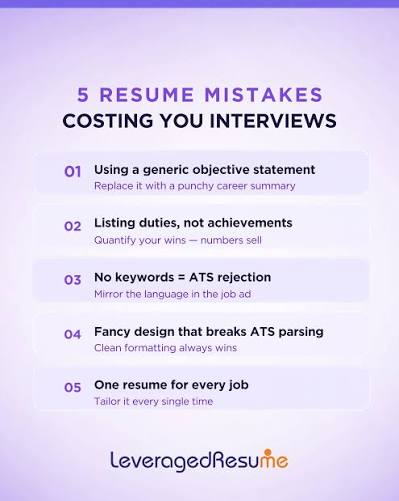
One of the biggest mistakes job seekers make is sending the same resume to every employer. Every job has different requirements, and recruiters want to see qualifications that match their specific needs.
Customize your resume for each application by highlighting the most relevant skills, experience, and achievements. Including keywords from the job description can also improve your chances of passing Applicant Tracking System (ATS) screenings.
2. Including Spelling and Grammar Mistakes
Typos and grammatical errors create a negative impression and suggest a lack of attention to detail.
Before submitting your resume:
- Proofread it several times.
- Use spelling and grammar checking tools.
- Ask a friend or mentor to review it.
A polished resume demonstrates professionalism and care.
3. Writing a Weak Resume Summary
Your resume summary is one of the first sections recruiters read. A vague or generic introduction fails to capture attention.
Instead, write a concise summary that highlights your experience, key skills, and career goals while tailoring it to the role you’re applying for.
4. Focusing on Responsibilities Instead of Achievements
Many resumes simply list job duties, but employers are more interested in what you accomplished.
Instead of writing:
- Responsible for managing customer service.
Write:
- Improved customer satisfaction by 20% through faster response times and process improvements.
Whenever possible, include measurable results to demonstrate your impact.
5. Using a Poor Resume Format
A cluttered or difficult-to-read resume can discourage recruiters from reading further.
Keep your resume clean by:
- Using clear section headings.
- Choosing a professional font.
- Including enough white space.
- Organizing information with bullet points.
- Limiting your resume to one or two pages.
A simple layout improves readability and works well with ATS software.
6. Including Irrelevant Information
Avoid adding information that doesn’t support your job application.
For example, outdated work experience, unrelated hobbies, or unnecessary personal details can distract recruiters from your qualifications.
Focus on skills, experience, certifications, and achievements that are relevant to the position.
7. Ignoring Keywords from the Job Description
Many companies use Applicant Tracking Systems (ATS) to scan resumes before a recruiter reviews them.
Read the job description carefully and include relevant keywords naturally throughout your resume. This increases the likelihood that your application will reach a hiring manager.
8. Not Highlighting Relevant Skills
Employers want to quickly identify the skills you bring to the role.
Include a dedicated skills section featuring both technical and soft skills, such as:
- Communication
- Leadership
- Project management
- Data analysis
- Microsoft Office
- Programming
- Problem-solving
- Teamwork
Only list skills that you genuinely possess and can discuss during an interview.
9. Using an Unprofessional Email Address
Your contact information should create a professional impression.
Instead of using casual or outdated email addresses, create one based on your name whenever possible.
Also, ensure your phone number and LinkedIn profile are current and accurate.
10. Failing to Update Your Resume
Your resume should reflect your latest achievements and qualifications.
Update it whenever you:
- Complete a certification.
- Learn a new skill.
- Finish an important project.
- Receive a promotion.
- Gain new work experience.
Keeping your resume current ensures you’re always ready for unexpected job opportunities.
Final Checklist Before Sending Your Resume
Before submitting your application, make sure you:
- Tailored your resume to the job.
- Corrected all spelling and grammar errors.
- Highlighted measurable achievements.
- Included relevant keywords.
- Used a clean and professional layout.
- Updated your contact information.
- Saved the file as a PDF if requested.
Taking a few extra minutes to review your resume can significantly improve your chances of getting an interview.
Conclusion
Avoiding common resume mistakes can greatly increase your chances of catching a recruiter’s attention. By customizing your resume for each job, highlighting achievements instead of responsibilities, using a professional format, and proofreading carefully, you present yourself as a strong and prepared candidate.
Remember, your resume is more than a list of qualifications—it’s your personal marketing document. Invest the time to make it clear, accurate, and tailored to each opportunity, and you’ll be one step closer to landing your next interview.