
Resume Mistakes by Experience Level: What Freshers, Mid-Career Switchers, and Career-Changers Each Get Wrong
Most resume advice treats every job seeker the same. That is why it fails so many of them. The mistakes that sink a fresher’s resume are not the mistakes that sink a career-changer’s resume — and the fixes are different too. A fresher who copies a senior manager’s format looks overblown. A career-changer who lists fifteen years of unrelated job history looks unfocused. A mid-career switcher who hides their experience to look “fresh” looks suspicious instead. This guide breaks down the resume mistakes by experience level, so you can spot the ones that apply to you and fix them before a recruiter does.
What Resume Mistakes Do Freshers Make Most Often?
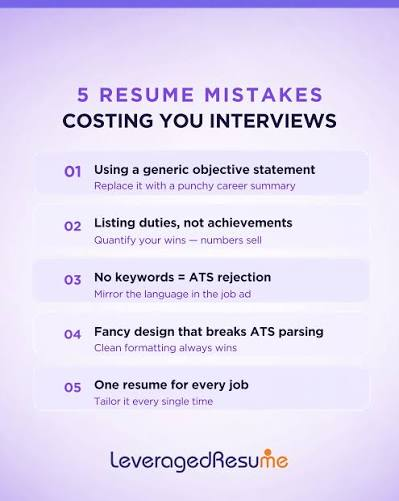
Freshers fail in the opposite direction from everyone else: they have too little to say, so they pad. The single most common fresher mistake is the empty objective line — “A motivated graduate seeking a challenging opportunity to grow and contribute” — which tells a recruiter nothing and wastes the most valuable space on the page. The second is listing coursework as if it were experience, with lines like “Completed BBA, 2023” and no evidence of anything actually done. And the third is the generic skills dump: “hardworking, team player, quick learner” with no project, no number, and no proof attached.
The fix is the evidence-first format. Lead with a skills section that names real tools and abilities, then a projects section where each project gets one quantified bullet — “Built a budget tracker in Excel used by 40 classmates” beats “Proficient in MS Excel” every time. Education goes last, not first, because your degree is the least interesting thing about you once you show what you can do. Drop the objective entirely and replace it with a two-line summary that names your target role and your strongest proof: “BBA graduate targeting entry-level analyst roles. Built three data projects in Python, including a sales dashboard that cut reporting time by 30% in a class project.” That is a fresher resume a recruiter can actually act on.
What Resume Mistakes Do Mid-Career Switchers Make?
Mid-career switchers — people with five to fifteen years of experience moving into a new function or a new industry — make the mistake of trying to look like beginners. They delete years of experience, shrink their job titles, and hide the seniority they earned, because they worry a hiring manager will think they are overqualified. The result is a resume that looks thinner than the person behind it, and recruiters notice the gap between the thin resume and the age on the LinkedIn profile. Hiding experience does not make you look younger; it makes you look like you have something to hide.
The second mid-career mistake is the opposite one: dumping everything. A fifteen-year career becomes a three-page chronology in which the relevant experience is buried under roles from a decade ago. Recruiters spend about seven seconds on a first scan, and if the first thing they see is a job from 2012 that has nothing to do with the role, they move on.
The fix is translation, not deletion. Keep your strongest, most recent roles and rewrite their bullets in the target industry’s language. A logistics manager moving into operations analytics should not write “Managed a team of 12 warehouse staff” — they should write “Managed a 12-person team and cut order-processing time by 18% using data-driven scheduling.” Same job, same truth, different language. Cut roles older than ten years to a single line each, and lead the resume with a summary that names the bridge: “Operations leader with 10 years of experience moving into analytics — track record of cutting costs and cycle times with data.”
What Resume Mistakes Do Career-Changers Get Wrong?
Career-changers face the hardest version of the problem: their entire work history points the wrong way. Their most common mistake is leading with a chronological work history that screams “wrong industry.” A teacher applying for a UX role whose resume opens with ten years of classroom jobs will be rejected before the recruiter reaches the portfolio link on page two. The second mistake is over-explaining the change. A whole paragraph about “following my passion” reads as a justification, and justifications invite doubt. The third is the skills mismatch: listing every skill from the old career and none from the new one, which makes the switch look like a daydream rather than a plan.
The fix is a functional-first structure. Open with a targeted skills section built around the new field — the tools, methods, and concepts you have actually learned — followed by a projects or portfolio section that proves them. Then a short “relevant experience” section that pulls only the transferable parts of your old career: the teacher becomes “Designed training for 200+ learners, improving pass rates by 22%,” which is user research and instructional design in different clothes. Your old job history still appears, but at the bottom, compressed to one line per role. And keep the reason for the change to one sentence in your summary — “Moving from teaching into UX design after completing a certified UX program and three client projects” — then let the evidence do the talking.
The Resume Mistakes Every Experience Level Shares
Some resume mistakes by experience level are unique, but three are universal. First, the typo in the header: a wrong phone number or a misspelled name is the fastest rejection in recruiting, because it signals carelessness about the one document that is supposed to prove your attention to detail. Second, the wall-of-text bullet: any bullet longer than two lines does not get read, it gets skipped — and whatever achievement it contained is lost. Third, keyword stuffing: copying the job posting’s phrases into a skills list without any evidence behind them. Recruiters and applicant tracking systems both catch it, and both punish it.
A 5-Minute Self-Audit Before You Send Your Resume
Run this check before every application. One, read your top third out loud: does it name the role you want and one piece of proof within five seconds? Two, count your bullets: is every one of them tied to a result, a number, or a specific tool? Three, check your dates: does the most recent, most relevant experience appear first? Four, search your resume for the words “responsible for,” “helped with,” and “hardworking” — replace each with a verb and a result. Five, send it to yourself and open it on your phone: if it is unreadable on a small screen, a recruiter on their phone will not read it either.
The resume that gets interviews is not the one with the most experience. It is the one whose mistakes have been removed for its level. A fresher who shows evidence instead of adjectives, a mid-career switcher who translates instead of hiding, and a career-changer who leads with proof instead of history all get the same result: a recruiter who keeps reading. Fix the mistakes your level makes, and your resume starts working for you instead of against you.
Resume Mistakes by Experience Level at a Glance
| Experience level | Most common mistake | Fix |
|---|---|---|
| Freshers | An empty objective line and a generic skills dump with no proof | Lead with real tools and quantified project bullets; replace the objective with a two-line summary naming the target role and strongest proof |
| Mid-career switchers | Hiding experience to look like a beginner, or dumping a full multi-page chronology | Translate recent roles into the target industry’s language and cut roles older than ten years to one line each |
| Career-changers | Leading with a chronological history that points the wrong way | Open with a targeted skills section and a short relevant-experience section; keep the reason for the change to one sentence |
Related GrowthSpot guides: ATS resume mistakes, the 5-second resume test, and one page vs two page resume.
Frequently Asked Questions
What is the biggest resume mistake freshers make?
The biggest fresher mistake is an empty objective line and a skills list with no evidence. Replace the objective with a two-line summary naming your target role and your strongest proof, and support every skill with a project, a number, or a real example.
Should mid-career switchers hide their experience to look younger?
No. Hiding experience creates a gap between your resume and your real background that recruiters notice immediately. Keep your strongest recent roles, translate their achievements into the target industry’s language, and compress anything older than ten years to one line each.
How should career-changers structure their resume?
Lead with a skills section for the new field, then a projects or portfolio section that proves those skills, then a short “relevant experience” section with only the transferable parts of your old career. Put the full chronological work history at the bottom, compressed.
Do resume mistakes really differ by experience level?
Yes. Freshers pad with generic claims because they have little to show; mid-career switchers either hide experience or dump too much of it; career-changers lead with a work history that points at the wrong industry. The fix for each group is different, which is why generic resume advice so often fails.