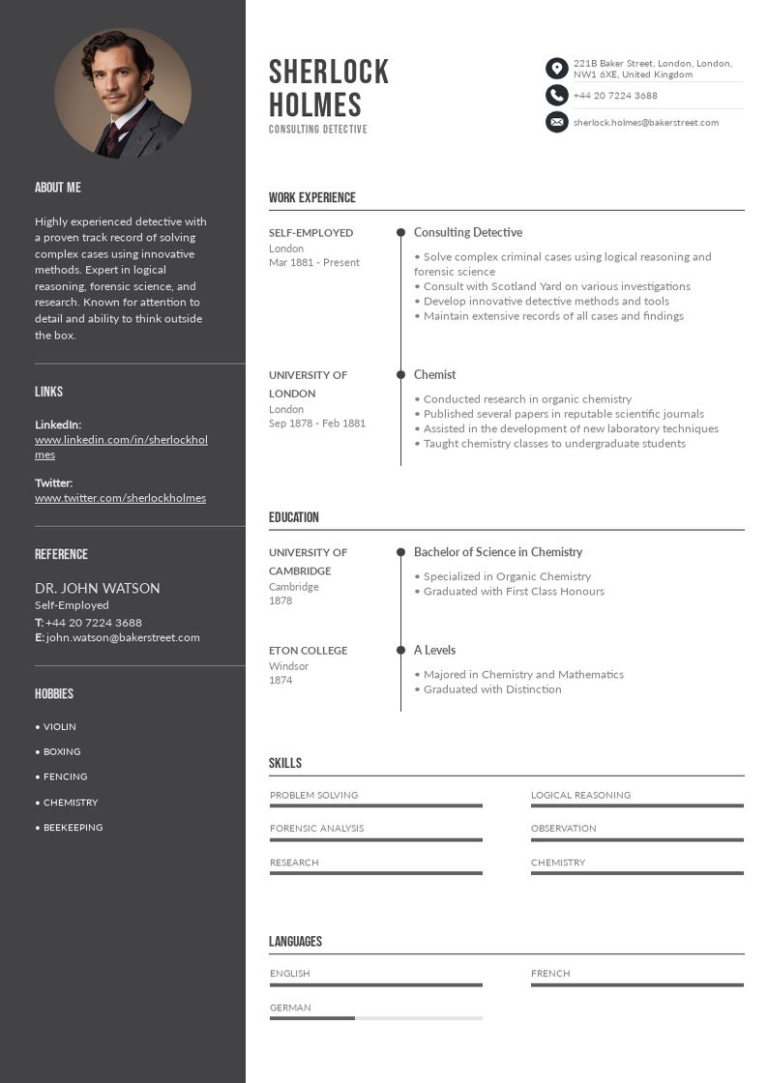

Career Change Resume: How to Reframe Your Old Job for a New Industry
Building a career change resume is mostly a translation problem: a hiring manager in your new industry doesn’t doubt your work ethic — they just can’t tell what your old job has to do with theirs. The fix is to rewrite every achievement in the target industry’s language, lead with transferable skills, and drop insider jargon that only made sense at your old company. When the reader can picture you doing their work, the industry gap stops mattering.
Most people making a career switch write a resume that reads like an apology letter for their own history. They list ten years of retail management, then sheepishly add “now seeking a role in tech sales.” No recruiter reads that and thinks, “Here’s my next hire.” The problem isn’t the career change itself — hiring managers hire career changers all the time. The problem is that the resume makes them do the translation work. They have to guess which of your old skills apply to their opening. They won’t. They’ll move on to the candidate who made it obvious.
The career changer’s edge, once you name it, is real: you’ve solved problems in harder contexts, managed people, handled customers, shipped things. That experience is genuinely more valuable than a fresh graduate’s. But it only counts if you express it in words the new industry recognizes. Here’s the method.
How Do You Translate Old Experience Into a New Industry’s Language?
The translation-table method is the single most effective technique for a career change resume. It works in three passes, and you’ll do it with a real job posting open beside you.
Pass 1: Harvest the target language. Take two or three job postings for roles you want. Highlight the nouns and verbs that repeat: “client relationships,” “pipeline,” “stakeholder,” “reporting,” “onboarding,” “cross-functional.” These are the words hiring managers scan for — applicant tracking systems literally search for them. Write down the top 15.
Pass 2: Map your old achievements onto that vocabulary. This is the translation table itself. Draw two columns. On the left, your old bullets; on the right, the same accomplishments rewritten in target-industry words. You’re not changing what happened. You’re changing the lens.
Pass 3: Rewrite with their verbs. Replace your old industry’s jargon with the target’s. A teacher’s “differentiated instruction for a classroom of 30” becomes “tailored training programs for groups of 30+” — which a corporate learning-and-development manager instantly understands. A restaurant manager’s “managed a team of 12 through high-volume dinner rushes” becomes “led a 12-person team in a fast-paced, customer-facing operation with strict service deadlines” — which reads like operations experience, because it is.
Here are before-and-after translations from real career-change scenarios:
- Teacher → Corporate Training: “Planned and delivered lessons for 120 students” becomes “Designed and delivered training programs to 120+ learners; improved assessment scores by 18% over one school year.” The substance didn’t change — but the words “designed,” “delivered,” and “improved” are what a training manager searches for.
- Retail Manager → Tech Sales: “Ran a store with 15 employees and hit monthly targets” becomes “Managed a 15-person team and exceeded quarterly revenue targets by 12%, building repeat-client relationships that lifted retention.” Revenue, retention, client relationships — that’s sales language describing a retail reality.
- Nurse → Project Management: “Coordinated care for a 20-bed unit” becomes “Coordinated schedules, resources, and communications across a 20-person care team; resolved conflicts and escalated risks under tight deadlines.” That’s project management described in clinical clothes.
Notice the pattern in every example: the results stay the same, the framing changes. You are not inventing experience. You are refusing to let vocabulary hide it.
Should Your Career Change Resume Lead With Skills or Experience?
Lead with a skills summary — but not the generic kind. For a career change resume, the top third of the page is where you win or lose, and a chronological work history that starts with a job the recruiter doesn’t understand will lose you in ten seconds.
Put a Relevant Skills section right under your contact header. Group 10–14 skills by the target role’s needs: “Client Discovery & Needs Assessment,” “CRM Systems (Salesforce, HubSpot),” “Team Leadership & Coaching,” “Data Reporting & Excel Dashboards.” Every skill you list should be one you can actually back up with a bullet below — recruiters notice when the skills list and the experience tell different stories.
Then write your experience bullets under your old job titles, but framed forward. Keep the company name and dates — honesty about your history is a strength, not a liability — and let every bullet answer the new industry’s question: “What does this prove I can do for us?”
One more thing that belongs near the top: a two-line summary that owns the change outright. Something like: “Customer-facing leader with 8 years in hospitality operations, pivoting to tech sales. Track record of exceeding revenue targets and coaching teams — now bringing relationship-building and pipeline discipline to SaaS.” Own it confidently and nobody questions it. Apologize for it and everybody does.
What Should You Cut From a Career Change Resume?
Translation is only half the work. The other half is deletion — cutting the old-industry detail that makes a hiring manager’s eyes glaze over.
- Insider jargon and certifications nobody outside your field recognizes. Your old industry’s acronyms are noise to the new one. Keep only credentials that transfer (a PMP helps almost anywhere; a niche vendor certification from a past life doesn’t).
- Duties that belong to the old world. If you were a chef, nobody in HR needs the line about knife skills — but they very much need “managed food costs to stay 4% under budget,” because that’s budgeting.
- Early-career roles that don’t serve the new story. Once you’ve translated your two or three strongest roles, older jobs from fifteen years back can shrink to one line or disappear. One page is ideal for most career changers, two if you have ten-plus years of real management behind you.
- The objective statement about “seeking new challenges.” Replace it with the confident summary above. Nobody was ever hired because they found a new challenge.
What If Your New Industry Requires Skills You Don’t Have Yet?
Then say so by showing what you’re doing about it — and put it in the skills section, honestly. “Python (learning; completed two Coursera specializations)” or “Salesforce Administrator (certification in progress, exam December 2026)” reads as drive, not weakness. Hiring managers hire for trajectory, especially in entry-to-mid roles.
The key word is honestly. Don’t list tools you’ve never touched. One interview question about a fabricated skill ends the process and burns the contact. List what you can demonstrate, mark what’s in progress, and let the translated experience carry the weight. A career change resume that pairs real transferable achievements with visible upskilling is genuinely more compelling than a same-industry resume with neither.
Frequently Asked Questions
Should I explain my career change in a cover letter instead of the resume?
Do both, briefly. The resume’s summary owns the change in two lines; the cover letter gets one short paragraph on the why — what drew you to the new field and which transferable strength you’ll bring first. Keep it to three or four sentences. Long explanations sound defensive.
Do hiring managers discriminate against career changers?
Some do, but fewer than you’d fear. The real filter isn’t the career change — it’s the unreadable resume. Managers hire people who make the value obvious. A well-translated career change resume often beats a same-industry candidate whose bullets are vague. Your competition is not the field; it’s ambiguity.
Should I use a functional resume format for a career change?
Usually not. Purely functional formats make recruiters suspicious because they hide timelines, and many applicant tracking systems parse them badly. Use the hybrid approach instead: a strong skills section up top, then a chronological work history with translated bullets. You get the best of both — skimmable skills and a clean, honest timeline.
How do I handle a pay cut or starting at a lower level?
Don’t address salary on the resume at all — that’s a conversation for the interview. Frame the level honestly: if you’re targeting junior roles after senior ones, your translated skills still demonstrate leadership and judgment that a true junior lacks. Many managers will see that as a bargain, not a red flag.